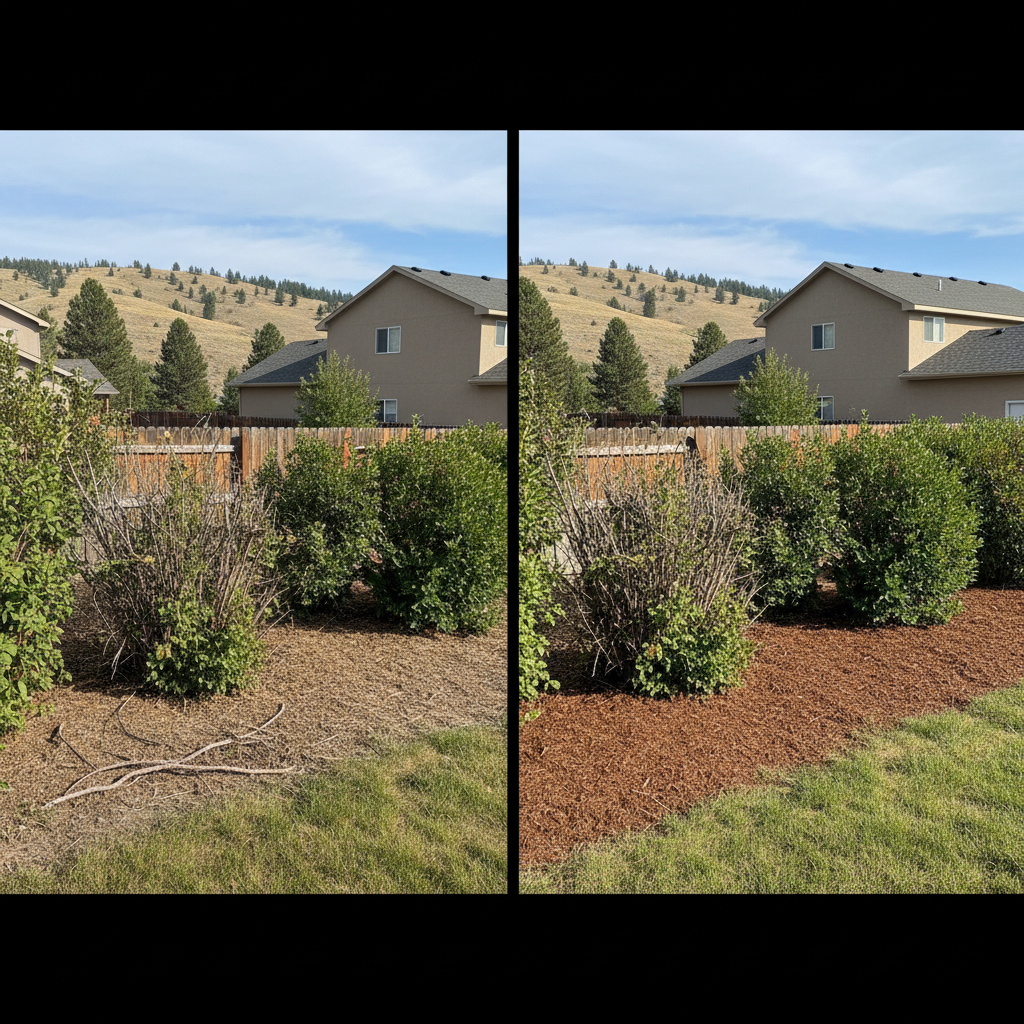
Alright, let's talk about those shrubs and bushes around your place. You've got options when it comes to trimming them, and honestly, a lot of folks just grab the hedge trimmers and just go at it. But there are two main ways to approach it: shearing and selective pruning. I see both done all over Billings, from the established neighborhoods up on the West End to the newer developments out by the Heights, and each has its place. Knowing the difference can save you headaches, and your plants too.
Shearing: The Quick & Uniform Look
Shearing is what most people picture when they hear 'hedge trimming.' You grab those power trimmers – or even hand shears if you're old school and have the patience – and you just cut everything to a uniform shape. Think straight lines, geometric shapes, or that perfectly rounded look. It's fast, it's efficient, and it gives you an immediate, tidy appearance. No doubt about it.
The Good About Shearing:
- Speed: It's quick work. You can knock out a lot of shrubs in a short amount of time.
- Uniformity: If you want a formal, manicured look, shearing delivers. It's great for hedges that define boundaries or create a clean backdrop.
- Cost: Because it's faster, it's generally less expensive if you're hiring someone, or less time-consuming if you're doing it yourself.
The Downside of Shearing:
- Plant Health: This is where it gets tricky. Shearing often cuts off just the outer layer of leaves, which then sprouts new growth. Over time, you can end up with a dense, leafy shell on the outside and a bare, woody interior. This 'shell' blocks light and air from getting to the inside of the plant, making it weaker and more susceptible to disease and pests. I've seen plenty of sheared shrubs in Billings that are just hollow on the inside.
- Appearance Over Time: While initially neat, that dense outer layer can start to look unnatural. Plus, all that new growth means you'll be shearing more frequently to maintain the shape, sometimes multiple times a season.
- Flower Loss: If your shrubs flower on old wood (like lilacs or forsythia), shearing at the wrong time means you're cutting off all the flower buds. No blooms for you!
- Durability: We get some harsh winters here in Montana, don't we? Plants that are weakened by constant shearing can be more vulnerable to winter kill, especially with those dry, cold winds we get.
Selective Pruning: The Art of Thoughtful Trimming
Selective pruning, sometimes called 'hand pruning' or 'structural pruning,' is a more detailed approach. Instead of just cutting the surface, you're actually looking at each branch and making intentional cuts. You're removing dead, diseased, or crossing branches, and thinning out the canopy to let light and air get through. You're also shaping the plant to its natural form, rather than forcing it into an unnatural box.
The Good About Selective Pruning:
- Plant Health: This is the big one. Selective pruning promotes stronger, healthier plants. By removing weak branches and improving air circulation, you cut down on the risk of disease and insect infestations. The plant gets light all the way through, leading to more robust growth.
- Natural Beauty: It enhances the natural shape and beauty of the shrub. You get a more graceful, open look that lets the plant's true character shine.
- Better Blooms: When done correctly, selective pruning encourages more and better blooms, especially for flowering shrubs.
- Less Frequent Maintenance: While it takes more time upfront, selectively pruned shrubs often need less frequent trimming because you're guiding their growth, not constantly battling it.
- Durability: A healthier plant is a tougher plant. It'll stand up better to our Billings weather, from the hot summers to the brutal winters.
The Downside of Selective Pruning:
- Time & Skill: It takes more time and a bit more knowledge to do it right. You really need to understand how the plant grows.
- Cost: If you're hiring a professional service like Lockwood Tree Solutions, selective pruning will generally cost more per plant because it's more labor-intensive and requires a skilled eye.
- Initial Appearance: It won't give you that perfectly uniform, 'just got a haircut' look immediately. It's more about long-term health and natural aesthetics.
My Recommendation for Billings Homeowners
Look, for most shrubs and bushes in a residential landscape here in Billings, I strongly recommend selective pruning.
Why? Because our conditions demand it. We have dry air, temperature extremes, and sometimes challenging soil. You want your plants to be as healthy and resilient as possible, right? Shearing, while fast, often compromises that health in the long run. It creates weak, dense growth that struggles in our environment.
Now, there are exceptions. If you have a formal hedge that absolutely *must* be a perfect rectangle, like around a historic property or a very specific garden design, then shearing might be your only option. But even then, I'd suggest incorporating some thinning cuts from time to time to maintain some interior health.
For everything else – your spirea, potentilla, serviceberry, lilacs, even your juniper bushes – selective pruning is the way to go. It'll keep them healthier, looking better, and blooming more consistently. It's an investment in the long-term beauty and vitality of your landscape, and believe me, your plants will thank you for it.
If you're not sure where to start, or if you've got some shrubs that have been sheared for years and need some rehabilitation, give us a call at Lockwood Tree Solutions. We can help you get them back on track.