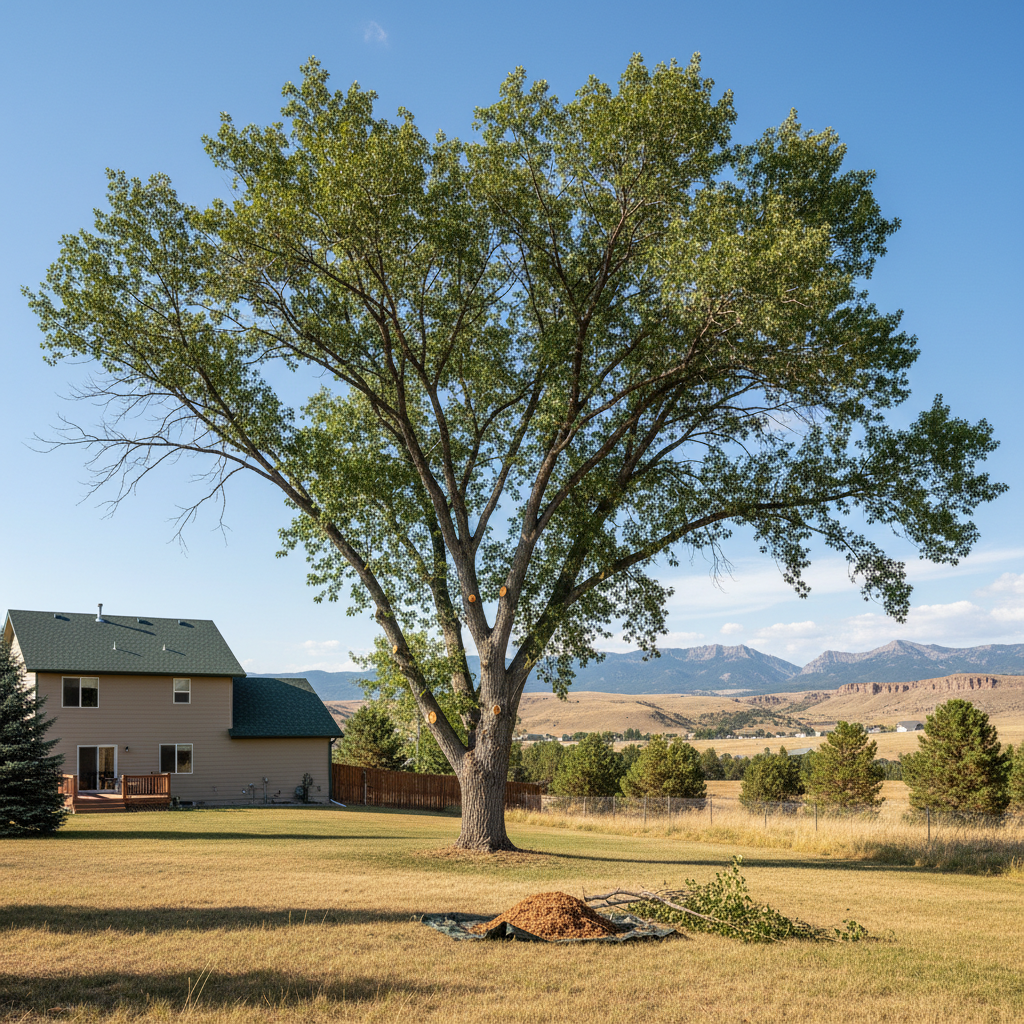
You've got trees, and sometimes, they need a trim. Maybe they're getting too close to the house, blocking a view, or just looking a little shaggy. It's a pretty common thing for homeowners in Billings to deal with, especially with some of the older, established trees we've got around the Heights or down in the Alkali Creek area. But here's the kicker: I've seen more than my fair share of folks make some real blunders when it comes to getting that work done. And trust me, a bad trim job or hiring the wrong crew can set you back a lot more than just the initial cost.
Mistake #1: Not Knowing What Your Trees Actually Need
This is probably the biggest one. A lot of people just think, 'My tree needs trimming,' without really understanding why or what kind of trimming. Are you trying to remove dead branches? Improve the tree's health? Clear power lines? Or just make it look tidier? Each of those goals requires a different approach, and a good arborist will ask you these questions. If you just tell someone, 'Trim my tree,' and they don't ask for more details, that's a red flag. You might end up with a tree that's been over-pruned, poorly shaped, or even damaged, all because the goal wasn't clear from the start.
For example, if you've got a big old Ponderosa pine that's shedding needles like crazy, you might think it just needs a trim. But it could be dealing with pine beetles or a fungal issue, and just trimming it without addressing the underlying problem won't fix a thing. You need someone who can diagnose, not just cut.
Mistake #2: Hiring the Cheapest Bid Without Checking Credentials
I get it, everyone wants to save a buck. But when it comes to tree work, 'cheap' often means 'expensive later.' You'll get three bids, and one guy is significantly lower than the others. Your first thought might be, 'Score!' Your second thought should be, 'Why?'
Here's what you need to ask:
- Are they insured? This isn't just about them. If an uninsured crew member gets hurt on your property, or if they drop a branch through your roof, guess who's on the hook? You are. Always ask for proof of liability and workers' compensation insurance. Don't just take their word for it; ask for a certificate from their insurance company.
- Do they have references? A reputable company will be happy to provide them. Call a couple of those references and ask about their experience.
- Are they certified? Look for ISA Certified Arborists. This means they've got the training and knowledge to do the job right, understanding tree biology and safe practices. It's not just some guy with a chainsaw.
- What's their experience with trees like yours? We've got a lot of specific tree types around Billings, from cottonwoods along the Yellowstone to spruce trees that handle our crazy winter winds. You want someone who knows how to handle them.
I've seen too many instances where a homeowner went with the lowest bid, only to have their trees butchered, property damaged, or worse, someone got hurt. Then they call us at Lockwood Tree Solutions to fix the mess, which always costs more than doing it right the first time.
Mistake #3: Letting Them Top Your Trees
This is a classic rookie mistake, and it's a huge no-no. Topping is when someone cuts off the main leaders or branches of a tree, leaving stubs. People think it makes the tree smaller or safer. What it actually does is stress the tree out, make it grow back weaker with a bunch of thin, unstable shoots, and often leads to decay and disease. It's like giving your tree a really bad haircut that makes it sick. Any arborist worth their salt will tell you that topping is detrimental to a tree's health and structural integrity. If someone suggests topping, thank them for their time and send them packing.
Mistake #4: Not Getting a Written Estimate or Contract
Verbal agreements are fine for borrowing a cup of sugar, but not for tree work. You need everything in writing. This includes:
- A clear description of the work to be done (e.g., 'remove deadwood from oak tree,' 'reduce crown by 20% on spruce').
- The total cost.
- What's included (cleanup, debris removal, etc.).
- When the work will be done.
- Proof of insurance.
This protects both you and the contractor. If there's a misunderstanding later, you've got something to refer back to. Without it, you're just hoping for the best, and hope isn't a good business strategy.
Mistake #5: Not Considering the Long-Term Health of Your Trees
Sometimes, homeowners focus too much on the immediate problem and not enough on the tree's overall health and future. A good tree trimming isn't just about removing a branch; it's about making cuts that promote healthy growth, maintain the tree's natural shape, and ensure its longevity. It's an investment in your property and the environment.
Think about how the tree will look and grow in five or ten years. Will the cuts encourage proper branching? Will they prevent future problems? An experienced arborist will consider these things and provide advice that goes beyond just the immediate task. They'll help you make decisions that benefit your trees for years to come, not just for the next few months.
So, before you grab the phone or let just anyone with a chainsaw onto your property, take a breath. Do your homework, ask the tough questions, and make sure you're hiring someone who knows what they're doing. Your trees, and your wallet, will thank you for it.